
Breath as a Gift: How Somatic Breathing Calms the Nervous System and Reconnects Us to God
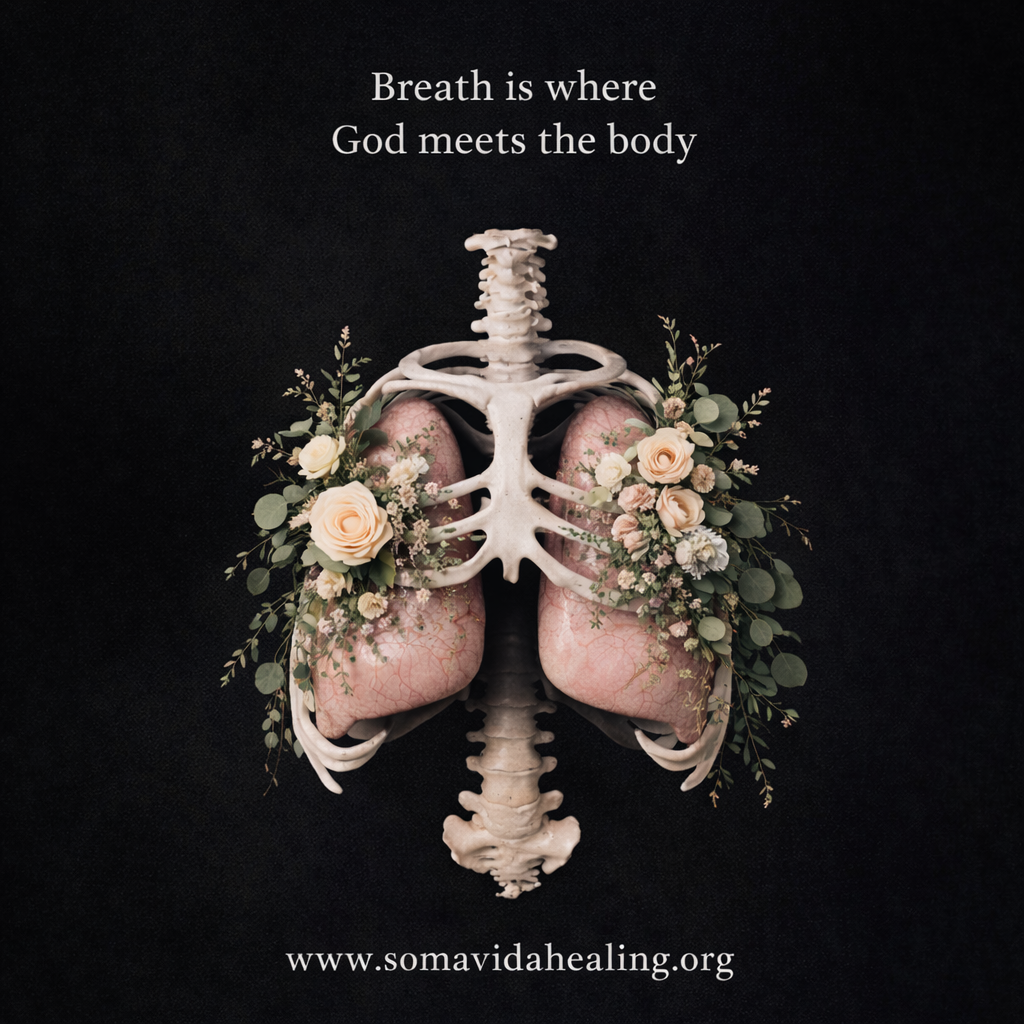
1 Peter 2:9, Isaiah 42:5, 1 Chronicles 29:14
There are moments when words feel like too much—but breath is always available.
Before we ever learned to strive, perform, or protect ourselves, God breathed life into us. Breath was our first experience of being held. Long before theology or language, breath taught the body what safety feels like.
In today’s world, many of us live far from that original rhythm. Trauma, chronic stress, grief, and relentless productivity can quietly shift the nervous system into survival mode. We may feel anxious, shut down, exhausted, disconnected—or all of the above.
Somatic breathwork gently invites us back into the body, back into regulation, and back into Presence.
Not through force.
Not through fixing.
But through receiving.
The Science: How Breath Calms the Nervous System
From a physiological perspective, breathing is one of the most direct ways to influence the nervous system.
The autonomic nervous system has two primary branches:
Sympathetic – activates fight, flight, or freeze
Parasympathetic – supports rest, digestion, repair, and connection
Trauma and chronic stress often keep the body stuck in sympathetic activation. Somatic breathing works because it sends a bottom-up signal—from the body to the brain—that safety is present.
Here’s how it works:
1. Slow, intentional breathing stimulates the vagus nerve
The vagus nerve is the main communication highway between the body and the brain. When breath slows—especially on the exhale—it activates the parasympathetic response, telling the body:
“You are safe right now.”
2. Longer exhales reduce stress hormones
Extended exhales lower cortisol and adrenaline levels, helping the body exit survival mode and return to equilibrium.
3. Awareness of breath brings the mind into the present moment
Trauma often pulls us into the past or pushes us into future fear. Breath anchors attention into now, where safety is more accessible.
4. Breath restores coherence between body and brain
When breathing becomes rhythmic and gentle, heart rate variability improves—an indicator of emotional regulation, resilience, and nervous system flexibility.
This is not about controlling breath.
It’s about listening to it.
Breath as Sacred: A Biblical Reflection
Scripture speaks of breath not merely as biology—but as holy exchange.
“Then the Lord God formed the man from the dust of the ground and breathed into his nostrils the breath of life.”
— Genesis 2:7
The Hebrew word ruach means breath, wind, and Spirit.
Every breath we take is a reminder:
We are sustained, not self-created
Life is received, not earned
God is closer than our next inhale
Jesus echoes this gift when He breathes on His disciples and says, “Receive the Holy Spirit” -John 20:22. Breath becomes the meeting place between the physical and the divine.
When we slow our breathing, we are not merely calming the body—we are making space to notice God’s nearness.
A Gentle Somatic Breath Prayer
This practice is designed to be trauma-safe, invitational, and non-demanding. If at any point it feels like too much, you are free to pause. There is no “right” way to breathe.
Begin here:
Sit or lie down in a comfortable position
Place one hand on your chest and one on your belly (if that feels safe)
Let your eyes soften or close
The Breath Pattern:
Inhale slowly through the nose for a count of 4
Pause gently for 1
Exhale through the mouth for a count of 6
Repeat 5–7 cycles
The Breath Prayer:
Inhale: “Lord, You are here.”
Exhale: “I receive Your peace.”
Or simply:
Inhale: “Receive.”
Exhale: “Release.”
Let the words be light—like a whisper, not a command.
Notice what your body does on its own.
Notice where breath feels easy.
Notice where it feels guarded.
There is no need to change anything.
Awareness itself is healing.
Why This Matters for Healing
Many people try to heal through insight alone—understanding their story, naming their pain, analyzing patterns. While insight is valuable, healing happens when the body experiences safety.
Breathwork supports:
Trauma recovery
Anxiety and panic regulation
Sexual healing and body trust
Emotional presence in relationships
Prayer that feels embodied rather than effortful
At Soma•Vida, we believe healing flows from encounter—not striving. Breath is often the doorway.
Reflection Questions
You may wish to journal, pray, or simply sit with these gently:
When I slow my breathing, what do I notice in my body first?
Where do I tend to hold my breath in daily life—and why might my body do that?
How does it feel to consider breath as a gift rather than a function?
What changes when I imagine God as present in my breathing rather than distant?
What might my body need right now—not to fix, but to feel safe?
A Closing Invitation
You do not need to breathe better to be worthy.
You do not need to calm down to be loved.
You do not need to understand everything to be held.
Breath is already happening.
God is already near.
Sometimes healing begins not with doing more—
but with letting yourself “be breathed”.
